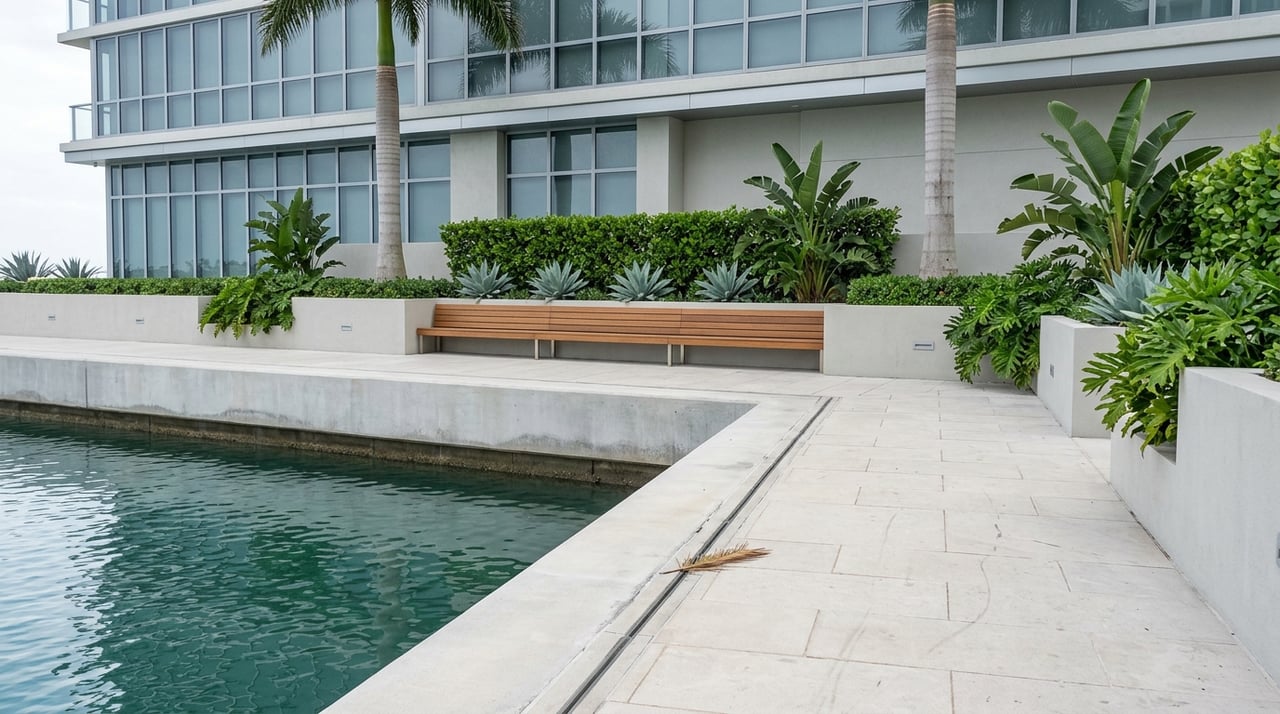
Downtown Miami Luxury Condos For Long-Term Investors
April 2, 2026
April 2, 2026
If you are looking for a luxury condo investment in Miami that can hold appeal beyond the next market cycle, Downtown deserves a serious look. This is not just a skyline story. It is a growing urban core with rising density, global buyer demand, strong rents, and multiple submarkets that let you match your strategy to the kind of asset you want to hold. Let’s dive in.
Downtown Miami has evolved into a true live-work-invest district rather than a market driven only by second-home demand. According to the Miami Downtown Development Authority’s data and demographics, Greater Downtown now has more than 101,000 residents, 155,000 jobs, and a median household income of $119,000, with projected population growth of 24.0% from 2025 to 2030.
That growth story matters if you are thinking long term. A district with a larger resident base, a major employment center, and expanding infrastructure tends to create more consistent housing demand than a market tied to one buyer profile alone.
The luxury condo case also gets support from pricing and rental trends. The Miami DDA Residential Analysis Report says Greater Downtown rents averaged $4,450 per unit in 2025, up 65.7% since 2019, while luxury condo rents reached $7,894.
For buy-and-hold investors, that is an important signal. It suggests Downtown is functioning as a place where people want to live full time, not just visit seasonally.
Several factors support the long-term investment thesis in Downtown Miami. The first is buyer depth. The DDA reports that more than 4,000 new-construction condo units sold between 2024 and 2025, with 48% bought by international buyers and 92% of those buyers coming from Latin America.
That global demand base can help support liquidity over time. The same report notes that Downtown Miami accounted for 60% of the international-buyer share within Greater Downtown, which reinforces the area’s visibility with cross-border buyers.
At the county level, MIAMI Realtors market data adds useful context. The luxury threshold in Miami-Dade rose to $3.3 million in 2024 from $1.4 million in 2019, and condos in the county have now posted 14 consecutive years of price appreciation or stability.
That does not guarantee future performance, but it does show that Miami’s upper-tier condo market has built unusual staying power. For many investors, that is the difference between a short-term trade and a strategic long-term hold.
One of the biggest mistakes investors make is treating Downtown Miami as one uniform condo district. In reality, Greater Downtown includes several submarkets with very different supply, pricing, and long-term risk profiles.
According to the DDA, Brickell and Edgewater alone account for more than 60% of Greater Downtown condo inventory. That means tower selection is only part of the decision. The neighborhood context matters just as much.
Brickell is the clearest benchmark for luxury condo investing within Greater Downtown. It holds 48.3% of the area’s condo inventory, and the DDA reports an average sale price of $939,000 as of Q2 2025.
Brickell is known for strong occupancy, premium rents, and very high land values. If your priority is broad buyer recognition, deep renter demand, and a more proven luxury core, Brickell often sets the standard.
Edgewater offers a different kind of luxury story. The DDA reports 7,904 existing condo units, 678 under construction, and 237 proposed, with an average sale price above $1 million.
In 2024, Edgewater generated $378.9 million in condo sales across 393 units, and luxury transactions accounted for 29% of that activity. If you value waterfront views and bayfront positioning, Edgewater can be compelling, though supply should still be part of your underwriting.
The Arts & Entertainment District sits in a more active development phase. The DDA says the neighborhood had 1,252 units under construction since 2024 and 994 proposed, with an average sale price of $927,000 as of Q2 2025.
This submarket also had average days on market of 192, which suggests buyers are taking a more selective approach. For investors, that can mean opportunity, but it also calls for more discipline around building quality, location, and resale positioning.
Midtown is a more compact option for investors who want urban convenience without the same level of luxury tower competition. The DDA says condos make up 27% of its housing stock, no new units were delivered in recent years, and the average sale price was $678,000 as of Q2 2025.
That smaller-scale profile can appeal to investors who prefer a steadier neighborhood feel. It may not offer the same ultra-luxury profile as Brickell or Edgewater, but it can fit a long-term strategy centered on stability.
The Central Business District is worth watching if transit access and employment demand are high on your list. The DDA notes moderate condo activity, rising prices, and a rental market that absorbed a wave of new units in 2025.
Wynwood, on the other hand, is still an emerging condo market. With only 43 existing units, plus 475 under construction and 246 proposed, it remains more of a long-range growth story than a current luxury condo anchor.
Luxury condo investing in Miami is about more than views, branding, and finishes. If you are planning to hold a unit over time, the building itself can shape your returns as much as the location.
In Miami-Dade, building recertification is a major part of condo due diligence. According to Miami-Dade County’s recertification guidance, the process now begins at 30 years for inland buildings and 25 years for coastal buildings, then repeats every 10 years.
The county also strengthened the program in 2022 to inspect more building components. That means engineering history, reserve planning, and assessment exposure are not side issues. They are central to long-term ownership risk.
It is easy to assume newer towers are always the safer bet, but the data is more nuanced. MIAMI Realtors reported that in late 2025, older condos aged 30 years and up spent 66 days on market compared with 81 days for newer units.
That does not mean older buildings are automatically better. It means well-run buildings with transparent finances can remain competitive, even when buyers have plenty of newer options.
In the luxury segment, amenity packages often help leasing and resale. Branded towers such as Aston Martin Residences Miami illustrate the level of wellness, concierge, entertainment, and recreation features buyers now expect.
Still, more amenities usually mean higher ongoing operating costs. For a long-term investor, it is worth asking whether the HOA budget, reserve structure, and long-range capital planning support the lifestyle the building promises.
In Downtown Miami, lifestyle is not separate from investment performance. It is one of the reasons people continue to choose the area for full-time living, seasonal use, and high-end rentals.
Walk Score rates Downtown Miami at 91 for walkability, 94 for transit, and 75 for biking. The DDA’s free Downtown Circulator and mobility network connect key destinations including Bayside Marketplace, Brightline MiamiCentral, Government Center, Kaseya Center, Publix, and multiple Metromover stations.
That access supports day-to-day convenience in a way many high-rise districts cannot match. If you are buying for long-term value, proximity to transit, services, and daily-use destinations can help a tower remain relevant as inventory grows around it.
Downtown also benefits from a dense cultural and public-space network. The DDA highlights major venues and parks including the Adrienne Arsht Center, Olympia Theater, Kaseya Center, Bayfront Park, and Maurice A. Ferré Park near Pérez Art Museum Miami and Frost Museum of Science.
For investors, this helps create what many buyers and renters want most: a neighborhood experience, not just a residential tower. That can be especially important in a market where new buildings continue to compete for attention.
If you are choosing among Miami’s core luxury condo markets, it helps to frame each one clearly.
Brickell is the premium liquidity play inside Greater Downtown. It offers strong occupancy, premium rents, and one of the most recognized luxury condo identities in the urban core.
Downtown Miami is broader and more flexible. It gives you more variety in how you prioritize transit access, culture, waterfront views, and neighborhood texture.
Miami Beach is a different investment case. According to the Douglas Elliman Miami Beach Q1 2025 report, the Miami Beach and Barrier Islands condo market had 4,239 listings, 22.1 months of supply, an average condo sales price of $1.49 million, and an average price per square foot of $1,102.
That market offers exceptional lifestyle appeal, but it is more coastal and tourism-linked than Downtown’s job-centered urban core. For many long-term investors, Downtown is the more balanced option when you want a mix of lifestyle, connectivity, and everyday demand.
If you are evaluating Downtown Miami for a long-term hold, focus on the factors that tend to remain relevant even as new supply enters the market:
The strongest investments are often the towers that balance luxury appeal with operational discipline. In a market with new inventory on the way, that balance can matter more than a flashy launch.
If you want a data-backed view of which Downtown Miami luxury condos best fit your hold period, lifestyle goals, and portfolio strategy, a confidential conversation can help you narrow the field. Debra Golan offers discreet, high-touch guidance for buyers seeking standout luxury residences across Miami’s top condo markets.
Stay up to date on the latest real estate trends.




Golan Group Miami at Douglas Elliman represents the finest of waterfront living. Whether you are selling or buying, count on our team to listen, understand and accomplish your goal.