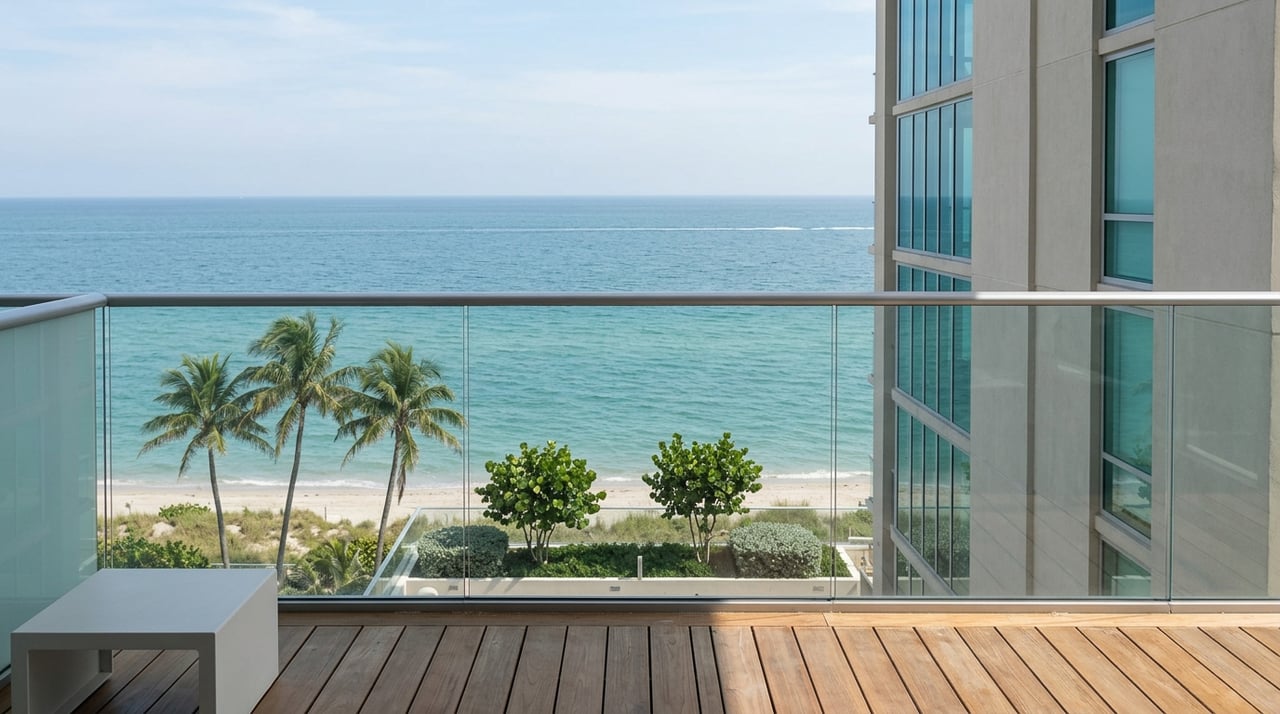
Year-Round Oceanfront Living In Miami Beach Condos
June 11, 2026
June 11, 2026
What does oceanfront living in Miami Beach really feel like when it is your everyday routine, not just a long weekend? If you are considering a condo here, the answer is more nuanced and more rewarding than the postcard version. From climate and walkability to building style, neighborhood tempo, and ownership realities, this guide will help you understand how year-round oceanfront living works in Miami Beach. Let’s dive in.
Living on the ocean in Miami Beach means your routine is shaped by the outdoors almost every day of the year. NOAA climate normals for the Miami Beach station show an annual mean temperature of 76.1°F, with average January highs and lows of 73.6°F and 61.2°F, and average August highs and lows of 88.1°F and 78.1°F. In simple terms, you can expect a warm-weather lifestyle that supports morning walks, pool time, outdoor dining, and beach access in every season.
That said, year-round beach living is not the same as endless perfect sunshine. Miami Beach notes that South Florida’s rainy season runs from May through October, so part of the local rhythm includes quick rain, tide awareness, and occasional post-storm water-quality checks. For many buyers, that is less a drawback and more part of understanding the real pace of coastal living.
The city infrastructure supports this lifestyle in practical ways. Miami Beach offers live beach-condition information, lifeguards, and flag warnings, along with public pools at Flamingo Park and Normandy Isles. Beachwalk and the free trolley system also make it easier to move between the beach, parks, dining, and cultural destinations without needing to drive for every stop.
Although Miami Beach is often talked about as one market, its oceanfront corridor offers three very different day-to-day experiences. The island stretches about nine miles and is commonly divided into South Beach, Mid Beach, and North Beach. If you are condo shopping, choosing the right stretch can matter as much as choosing the right building.
South Beach runs from South Pointe Park to 23rd Street and delivers the most iconic version of Miami Beach living. This is where you find Ocean Drive, Lincoln Road, Española Way, Lummus Park, and the pastel Art Deco setting that many buyers picture first. The appeal here is energy, walkability, and the ability to move from a beach walk to dinner, shopping, or nightlife without much planning.
Lummus Park adds to that everyday appeal. The city describes it as a beachfront park with paved walking and biking paths, public restrooms, outdoor exercise areas, yoga classes, and event programming. If your ideal oceanfront life includes motion, people-watching, and access to activity at nearly any hour, South Beach often feels like the natural fit.
Mid Beach runs from 24th to 60th streets and often appeals to buyers who want beach access and a polished atmosphere without the full pace of South Beach. Tourism materials describe it as a blend of South Beach cool and North Beach calm, with stylish hotels, restaurants, lounges, an arts district, and a broad stretch of sand. The result is a setting that often feels more resort-like and a little less compressed.
For condo buyers, Mid Beach can be compelling because it often balances lifestyle and privacy. You are still close to dining and activity, but the day-to-day tone can feel calmer. For many people, this is the sweet spot between high energy and low-key residential living.
North Beach extends from 60th Street to Surfside and has the quietest, most residential feel of the three. It is known for MiMo architecture, a broader beach, and fewer crowds. If your version of oceanfront living is centered on space, routine, and a slower daily rhythm, North Beach often stands apart.
North Beach Oceanside Park reinforces that tone with shade trees, picnic tables, barbecue grills, dog runs, and open green space. Compared with the more social atmosphere in the southern part of the island, North Beach tends to feel more relaxed and neighborhood-oriented. That can be especially appealing if you want the ocean close at hand without centering every day around the scene.
In Miami Beach, architecture is not just visual background. It shapes the ownership experience and often the kind of lifestyle a building attracts. The city identifies Art Deco, Mediterranean Revival, and Miami Modern, or MiMo, as defining parts of the local built environment.
That variety creates a wider range of condo options than many buyers expect. In South Beach, oceanfront or nearby living may include preserved historic buildings in or near the core. In North Beach, you may see more MiMo and residential-style stock. In the middle stretches, many buyers are drawn to later-generation resort-style or contemporary towers that align with a more modern luxury expectation.
Miami Beach also takes preservation seriously. The city notes that the Miami Beach Architectural District became the nation’s first urban 20th-century historic district on the National Register in 1979, and that historic districts in Miami Beach now include more than 2,600 buildings. If you are considering a historic property, it is worth remembering that charm and architectural identity can come with preservation review and specific ownership considerations.
One reason year-round oceanfront living works so well in Miami Beach is that the lifestyle extends far beyond the sand. Dining is woven into everyday life, with oceanfront restaurants, neighborhood spots, and a wide range of cuisines noted by local destination guides. In South Beach, Ocean Drive and nearby areas offer a concentrated stretch of dining, entertainment, and street-level activity that stays active well into the evening.
Wellness is also built into the environment. The city highlights yoga, paddleboarding, and Beachwalk rides, while local visitor resources point to spa services, group fitness options, and outdoor exercise opportunities. For many condo owners, the beach is less an occasional outing and more a backdrop to regular routines like sunrise walks, bike rides, and time outdoors before or after work.
The cultural layer is another part of what sets Miami Beach apart from a typical beachfront market. City cultural partners include The Bass, New World Symphony, Miami Beach Botanical Garden, Miami City Ballet, and Wolfsonian-FIU. That means year-round living can include easy access to exhibitions, performances, gardens, and public programming alongside the expected beach amenities.
Mobility helps tie it all together. Miami Beach says its free trolley operates daily from 8 a.m. to 11 p.m. and serves South Beach, Mid Beach, Collins Express, and North Beach. Combined with Beachwalk and bike rentals, that makes it easier to enjoy multiple parts of the island without relying entirely on a car.
A common misconception about oceanfront condo living is that the beach functions like a private resort. In reality, Miami Beach maintains a well-managed public shoreline with clear rules that shape the experience. The city prohibits alcohol and smoking on its beaches and restricts or bans items such as coolers, glass containers, tents, tables, inflatable devices, and loud music.
For many residents, these rules help create a more orderly and usable environment. They also set realistic expectations for buyers who are imagining a very different type of beach use. If you plan to live here full time, understanding how the beach is managed is part of understanding the lifestyle itself.
Before you fall in love with the view, it is important to understand the practical side of oceanfront ownership in Miami Beach. The city describes Miami Beach as a low-lying coastal barrier island that is inherently vulnerable to flooding and storm surge. It is investing in pump stations, drainage improvements, and road elevation, but buyers should still review flood zone, elevation, and insurance considerations carefully.
The city also notes that FEMA A and V zones can fall into mandatory insurance zones and that flood maps and base flood elevations may change over time. In other words, flood review is not a box to check at the end of the process. It is part of the core purchase conversation for oceanfront property.
Florida condo compliance is another key factor, especially in a market with many older buildings. State law requires milestone inspections for buildings three stories or higher once they reach 30 years of age, with repeat inspections every 10 years thereafter. Structural integrity reserve studies are also required at least every 10 years for qualifying condominium associations, with older associations facing deadlines that became especially important in 2024 and, in some cases, 2026 when paired with milestone inspection requirements.
For condo buyers, that makes association health a major part of due diligence. Reserve funding, inspection status, and the overall condition of the building directly affect both ownership costs and long-term confidence. In Miami Beach, those details are part of the lifestyle story, not separate from it.
The smartest way to approach year-round oceanfront living in Miami Beach is to think beyond the unit itself. Start by asking how you want your days to feel. Do you want a social, highly walkable setting with constant activity, a polished resort-style environment with a balanced pace, or a quieter residential rhythm with broader stretches of beach?
That simple question often points clearly toward South Beach, Mid Beach, or North Beach. South Beach suits buyers who want to be near the action. Mid Beach often fits those looking for luxury and ease with a calmer tone. North Beach tends to appeal to buyers who value a more understated and residential daily experience.
The right condo is not only about finishes, views, or amenities. It is about finding the version of Miami Beach that fits the way you actually want to live all year.
If you are exploring oceanfront condos in Miami Beach and want discreet, highly tailored guidance, Debra Golan offers a refined, data-driven approach shaped by deep experience in Miami’s waterfront market.
Stay up to date on the latest real estate trends.

Golan Group Miami at Douglas Elliman represents the finest of waterfront living. Whether you are selling or buying, count on our team to listen, understand and accomplish your goal.