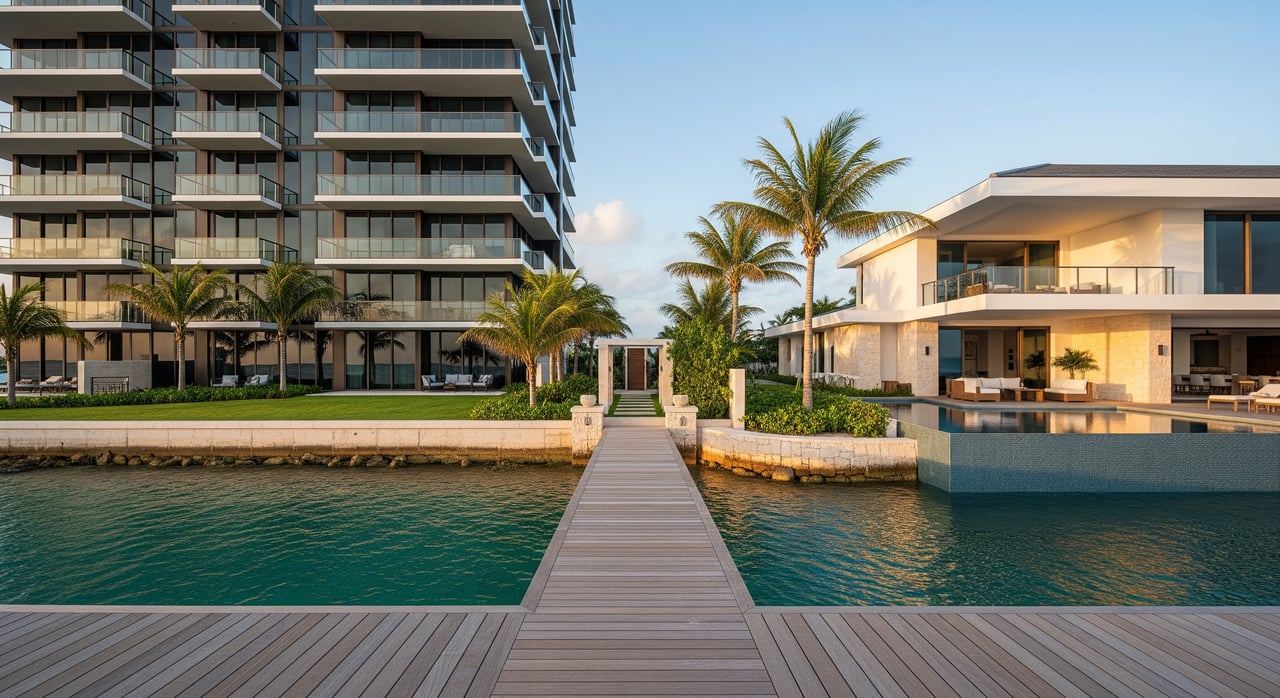
Waterfront Condo vs House In Bal Harbour
December 4, 2025
December 4, 2025
Are you choosing between a waterfront condo and a private house in Bal Harbour? Both offer world-class water views and a coveted Miami lifestyle, but the day-to-day experience and obligations are very different. You want clarity on dockage, fees, insurance, maintenance, and privacy so you can buy with confidence. This guide breaks down the tradeoffs and gives you a practical checklist to make the right call for how you live. Let’s dive in.
Bal Harbour is a compact, affluent village on a barrier island with the Atlantic to the east and Biscayne Bay to the west. The skyline is defined by luxury high-rise condominiums with full-service amenities. True single-family waterfront estates in or next to Bal Harbour are limited, so homes with private docks are relatively scarce.
You will see two main paths in this micro-market. High-rise condos deliver turnkey living, services, and amenities. Single-family waterfront houses, often found in adjacent pockets like Surfside or parts of Miami Beach and North Bay Village, offer land, docks, and privacy with hands-on ownership.
Many waterfront condos do not have a slip attached to each residence. Some buildings offer shared marina facilities, guest docks, or deeded slips, while others offer no dockage at all. When slips exist, they are typically controlled by the association with rules, fees, and possible waitlists. Boat size, use, and access can be restricted by building policies or local conditions.
Waterfront houses commonly allow private docks, boat lifts, and direct bay access when the lot frontage supports it. You set the standards for your marine setup, subject to regulations. You are also responsible for all upkeep, from pilings and lifts to lighting and utilities.
Docks, lifts, and seawalls on Biscayne Bay generally require permits through Miami-Dade County and relevant state or federal agencies. Environmental and navigation rules affect setbacks, depth, and no-wake areas. Seawall age and condition are critical because failure can be costly and can affect insurance and structure.
Key takeaway: If guaranteed private dockage for a large vessel is essential, a single-family lot or a low-rise with deeded slips is often the more reliable path. For any condo, verify whether a slip is deeded or association-controlled, and review all related fees and priority rules in writing.
Monthly condo fees typically cover the building’s master insurance, common-area upkeep, security, landscaping, and amenity operations like pools, gyms, valet, and concierge. In luxury towers, fees are higher because staffing and amenities are elevated. Special assessments can occur for structural projects or reserve shortfalls, so it is vital to review budgets and reserves.
With a house, there is no condo fee unless you are in a gated community with an HOA. You will, however, pay directly for landscaping, pool care, dock and seawall maintenance, exterior painting, pest control, and private security if desired. Estates with staff such as housekeepers, gardeners, and security bring ongoing payroll or vendor costs.
Condo associations carry a master policy for the structure and common elements. You will still need an HO-6 policy for interior finishes, contents, liability, and loss assessment. Pay attention to how the master policy is structured, including hurricane deductibles and any exclusions.
For a single-family home, you will secure homeowner coverage for the structure and contents, plus windstorm coverage when required by carriers. Most waterfront addresses sit in FEMA flood zones where lenders require flood insurance through the NFIP or private markets. Premiums vary by zone, elevation, and construction.
Bottom line: Florida’s coastal insurance market evolves, and premiums can be material. Build realistic insurance numbers into your decision early.
In a tower, exterior and building systems are handled by the association. That reduces your time commitment and simplifies daily living. It also makes reserves, engineering reports, and management quality central to your risk profile.
With a waterfront house, you control contractors, materials, and schedules. You also assume the operational overhead, including occasional large items like roof work, HVAC replacement, pool resurfacing, and seawall repairs. Marine environments add corrosion, wood rot, and salt exposure to the maintenance list.
Condos offer controlled access, monitored lobbies, and professional security protocols. Privacy is limited to your residence and terraces. Houses deliver exclusive outdoor spaces and seclusion, but comparable safety may require private security staff or robust systems.
Condos lean into hospitality-level service: valet, concierge, spa and fitness, event rooms, and in some cases on-site retail. It is a smooth turnkey lifestyle where provisioning and vendors can be coordinated for you. Houses emphasize outdoor living with private pools, yard space, and direct water access designed to your taste.
Ask yourself if you prefer a managed experience or the freedom to customize everything. Proximity to Bal Harbour Shops and nearby dining is a shared benefit, but your daily rhythm will feel different in a tower versus a private estate.
Lenders evaluate the association’s insurance, reserves, owner-occupancy ratios, and any pending litigation. Since 2021, underwriting has tightened in some cases, and buildings with weak reserves or large pending assessments can face financing challenges. Confirm your lender’s building approval early.
Underwriting for single-family homes centers on your credit and the property’s condition. For waterfront homes, seawall and dock conditions can influence appraisal and lender comfort. Clean permits and maintenance records support value.
Luxury coastal properties can vary in time on market. Scarcity supports pricing for unique assets, but very large, customized estates may trade on a longer timeline. In Bal Harbour’s tight micro-market, rarity can be a value driver for both condos and houses.
Florida condominium governance is governed by state statute. Associations manage budgets, reserves, and assessments, and older buildings in Miami-Dade are subject to inspection and recertification schedules. Engineering reports and meeting minutes help you evaluate structural planning and risk.
Short-term rental rules vary by municipality and association. Some buildings or local codes restrict or prohibit STRs. Always confirm policies and bylaws in writing if rental flexibility matters to you.
Choose a luxury condo if you want:
Choose a waterfront house if you want:
Tip: If dockage is your deciding factor, confirm deeded slips or viable marina solutions before you write an offer on a condo. If privacy and customization drive you, weigh the time and staffing needed to run an estate.
Seeing both lifestyles in person helps you decide quickly. Tour a few top-tier towers to understand service levels and review their reserves and engineering timelines. Then step into nearby waterfront homes to assess privacy, dock setups, and operational needs. When you are ready to compare specific properties line by line, schedule a confidential consultation with Debra Golan for private guidance and access to off-market opportunities.
Stay up to date on the latest real estate trends.

Golan Group Miami at Douglas Elliman represents the finest of waterfront living. Whether you are selling or buying, count on our team to listen, understand and accomplish your goal.